

The skills section is one of the most read parts of a resume, and one of the most wasted. Many people fill it with the same words, such as “communication”, “teamwork” and “hard-working”, without any proof. A reader learns almost nothing from that, and software that scans for specific tools or abilities gets little to work with.
This guide lists 15 skills that employers look for in many kinds of jobs, and shows how to prove each one with a short example. It also explains how to choose the right skills for your own situation, and where to put them. Always match your list to the job advert and include only what is true.
- Match the job advert: The best skills to list are the ones that the employer asks for and that you can honestly demonstrate.
- Prove each skill: A skill listed in one section and supported by a result in your experience bullets is far more convincing than a bare word.
- Mix hard and soft skills: Technical and practical skills show what you can do, and soft skills show how you work, and the best resumes include both.
- Keep the list focused: Six to twelve relevant skills are better than a long list that buries the important ones.
In this guide
Hard skills and soft skills
Hard skills are specific, teachable abilities, such as using spreadsheet software, writing code, operating equipment or speaking a language. They are easy to test and often appear in job adverts as requirements. Soft skills describe how you work with others and handle situations, such as communication, adaptability and problem solving. Employers value both, but soft skills are hard to judge from a word alone, so show them through examples.
The 15 skills
The table groups skills that employers ask for in many different jobs. Treat it as a menu, since no one needs all fifteen on a single resume.
| # | Skill | Type | How to prove it on a resume |
|---|---|---|---|
| 1 | Communication | Soft | Wrote weekly updates for a team of ten and presented results to managers |
| 2 | Teamwork | Soft | Coordinated a four-person group project that finished two days early |
| 3 | Problem solving | Soft | Found the cause of repeated order errors and introduced a checklist that stopped them |
| 4 | Time management | Soft | Balanced full-time study with part-time work and met every assignment deadline |
| 5 | Adaptability | Soft | Learned a new booking system in a week when the team changed software |
| 6 | Spreadsheets | Hard | Built a monthly budget sheet with formulas, charts and filters |
| 7 | Word processing and documents | Hard | Formatted a 30-page report with headings, contents and page numbers |
| 8 | Customer service | Hard and soft | Resolved around 30 customer queries a day with a friendly, clear manner |
| 9 | Data entry and accuracy | Hard | Entered records at 55 words per minute with very few errors |
| 10 | Research | Hard | Compared five suppliers and recommended one, saving the club money |
| 11 | Writing | Hard | Wrote product descriptions and a newsletter read by several hundred subscribers |
| 12 | Social media | Hard | Planned and posted three times a week for a club account |
| 13 | Basic design | Hard | Designed posters and slides in a free design tool for school events |
| 14 | Critical thinking | Soft | Checked the sources for a class report and corrected two false claims |
| 15 | Organisation and planning | Soft | Planned a 120-person event, handling the schedule and the budget |
The examples are only models, so replace them with your own real experiences. Use numbers only if you can explain them, and describe the scale in words if you do not have exact figures.
How to choose your skills
- Read the job advert: Underline the skills, tools and qualities that it mentions, especially those that appear more than once.
- List what you can honestly claim: Write every skill you have used, including those from school, volunteering and hobbies.
- Match the two lists: Keep the skills that appear in both, and rank them by how important they are for the role.
- Check that you can give an example: If an interviewer asked you to tell a story about a skill, could you? If not, leave it out or learn more first.
- Use the employer’s wording: If the advert says “customer service”, use that phrase and not a creative alternative.
Where to put skills on the page
Placement matters as much as the words. Readers scan the top of the page first, and software often looks for a clearly named skills section.
- A skills section: Put a short, scannable list near the top if skills matter most for the role, or after experience if your jobs are the stronger evidence.
- Your summary: Mention two or three of your strongest skills in the first lines, in a natural sentence.
- Experience bullets: Show skills in action through your achievements, since a skill in a bullet is more convincing than in a list.
- Group related skills: Headings such as Technical, Languages and Customer Support make a list easier to read than a long unbroken line.
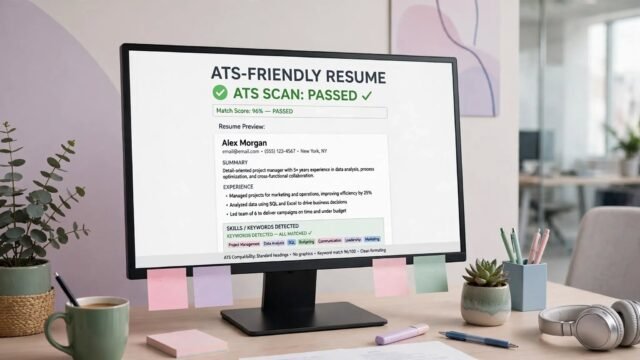
For software that scans resumes, plain text works best, as explained in our guide to writing an ATS-friendly resume, and for layout help see our guide to formatting a resume in Word.
Skills for different situations
The best list depends on where you are in your career, so adjust the emphasis to fit.
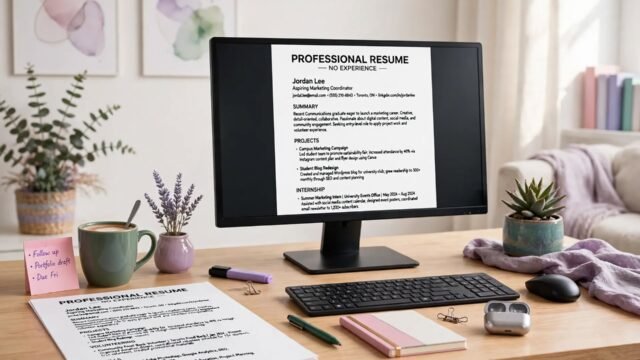
If you are a student or have little experience, lead with practical skills from projects, volunteering and part-time work, as shown in our guide to writing a resume with no experience. If you are changing careers, put transferable skills first, such as communication, planning and customer service, and connect them to the new field in your summary. If you are experienced, focus on the senior and specialist skills that match the role, and drop the basic ones that every candidate has.
Build the skills you want to add
If the job asks for a skill that you lack, you can learn it. Free courses are a good way to start, such as our Excel course for spreadsheets or the Canva course for basic design, and you can practise typing speed with our free Online Typing Speed Test so that you can state a real figure. Add a skill to your resume only after you have actually used it, and be ready to show it.
Mistakes to avoid
- Listing skills you do not have: An exaggerated skill can come out in an interview or on the job, and it damages trust.
- Using vague adjectives: Words such as hard-working and motivated are claims, not skills, so show them through results.
- Rating yourself with bars or stars: Charts of five stars are subjective and often unreadable by software, so use plain text.
- Listing outdated tools: Remove software that no one uses any more, unless the advert asks for it.
- Making the list too long: A very long list suggests that none of the skills is strong, so choose the most relevant.
For a full walk-through of resume writing, take our free Resume writing course, and see how an achievement-focused resume reads in our guide to creating a resume that gets noticed. You can check the length of your resume with the Word Counter.
Questions
What are the best skills to put on a resume?
The best skills are the ones that match the job advert and that you can prove. Common examples are communication, teamwork, problem solving, spreadsheet skills, customer service and organisation. Choose six to twelve that fit the role and show each with an example.
Should I list soft skills on my resume?
Yes, but show them through results and examples rather than listing adjectives. A bullet that describes how you coordinated a team or resolved a customer problem proves the skill. A list of words alone proves very little.
How many skills should I include?
Six to twelve relevant skills is a good range for most resumes. A shorter, focused list is easier for readers and for software to process than a long one. Put the most important ones first.
Can I include skills I am still learning?
You can if you state your level honestly, for example "basic" or "learning", and you can show some real use. Do not claim expertise that you do not have. Employers often value people who are learning actively, as long as you are clear about where you stand.

 Careers
 Careers