


A resume lists what you have done. A cover letter explains why it matters for this particular job. When a hiring manager has several similar resumes in front of them, a short, specific letter can show motivation, communication skills and a real interest in the role, which a list of dates cannot do.
This guide shows how to structure a cover letter, what to put in each paragraph and how to tailor it quickly. It includes a full example that you can adapt, and a list of the mistakes that make letters forgettable. The advice is general, so follow any instructions in the job advert.
- One page is enough: Most effective letters are about 250 to 400 words, which is long enough to make a case and short enough to be read.
- Make it about the employer’s needs: Show how your skills solve their problem, instead of repeating your resume or describing what you want.
- Use a simple four-part structure: An opening that names the role, one or two paragraphs of evidence, and a polite closing with a next step cover everything you need.
- Tailor every letter: Mention the company and the role by name, and connect at least one real achievement to the advert.
In this guide
Do you need a cover letter?
If the advert asks for one, always send it. If it is optional, a good letter can help, especially when you are changing careers, have little experience, or want to explain a gap or a move. If a form has no space for one, put a short version in the email or in the notes field. A weak or generic letter can hurt, so write one only if you will make it specific.
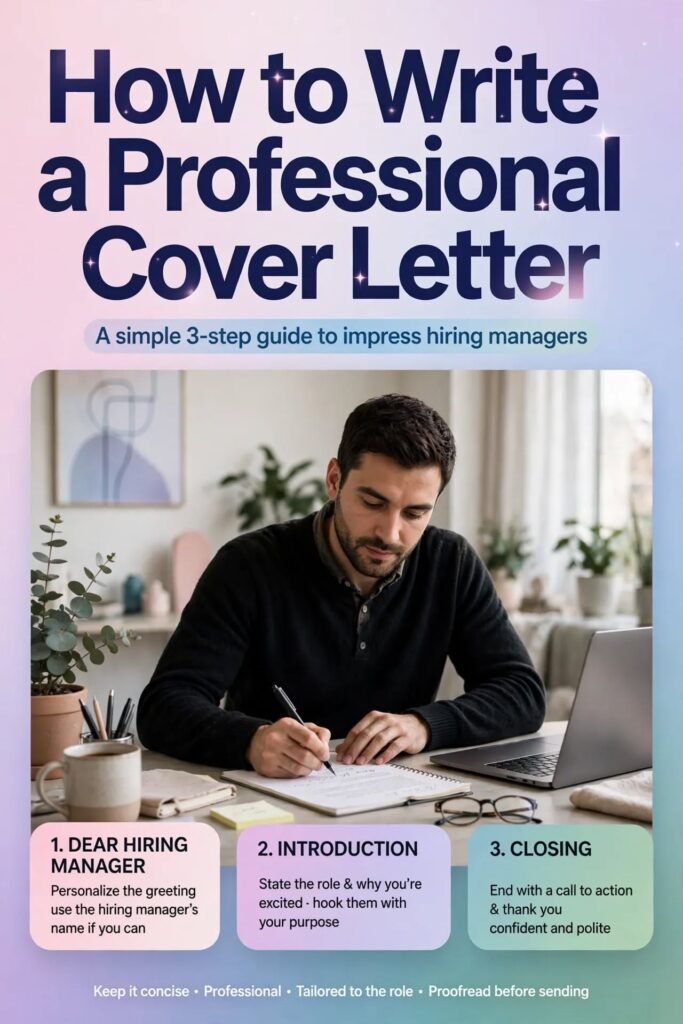
The structure of a cover letter
| Part | Purpose | Length |
|---|---|---|
| Header | Your contact details, the date and the employer’s details | A few lines |
| Greeting | Address a named person if you can find one | One line |
| Opening paragraph | Name the role, say where you saw it and give a one-sentence reason you fit | 2 to 3 sentences |
| Body paragraphs | Give one or two examples of results that match the job | 4 to 8 sentences |
| Closing paragraph | Show enthusiasm, state the next step and thank the reader | 2 to 3 sentences |
| Sign-off | A polite close and your name | Two lines |
Step 1: Research before you write
Read the job advert twice and underline the three or four things that matter most. Visit the company’s website and look at its products, mission and recent news. Try to find the name of the hiring manager, because a letter addressed to a person feels more personal than “To whom it may concern”. If you cannot find a name, use a neutral greeting such as “Dear Hiring Team”.
Step 2: Write a strong opening
The first paragraph decides whether the reader continues. Say which job you are applying for and give one clear reason why you are a good fit. Avoid openings that waste space, such as “I am writing to apply for the job that I saw on your website.”
| Weak opening | Stronger opening |
|---|---|
| I am writing to apply for the sales assistant position. | I would like to apply for the sales assistant role at Greenfield Home, where my two years of customer service in a busy shop would help your team. |
| I am very passionate about marketing and would love to work for you. | After growing a student society’s newsletter from 150 to 600 subscribers, I would like to bring the same approach to your marketing assistant role. |
Step 3: Prove it in the body
Use one or two short paragraphs to give evidence. Choose the achievements from your resume that match the advert most closely, and tell the story behind them. State what the situation was, what you did and what came out of it. Where possible, mention a number, a result or a specific outcome, and make sure that it is true.
Connect each example to the employer’s need. For instance, if the advert stresses accuracy, describe how you handled cash or data without errors. If it stresses teamwork, show a time you coordinated a group to meet a deadline. Do not repeat the whole resume, because the letter should add context and personality.
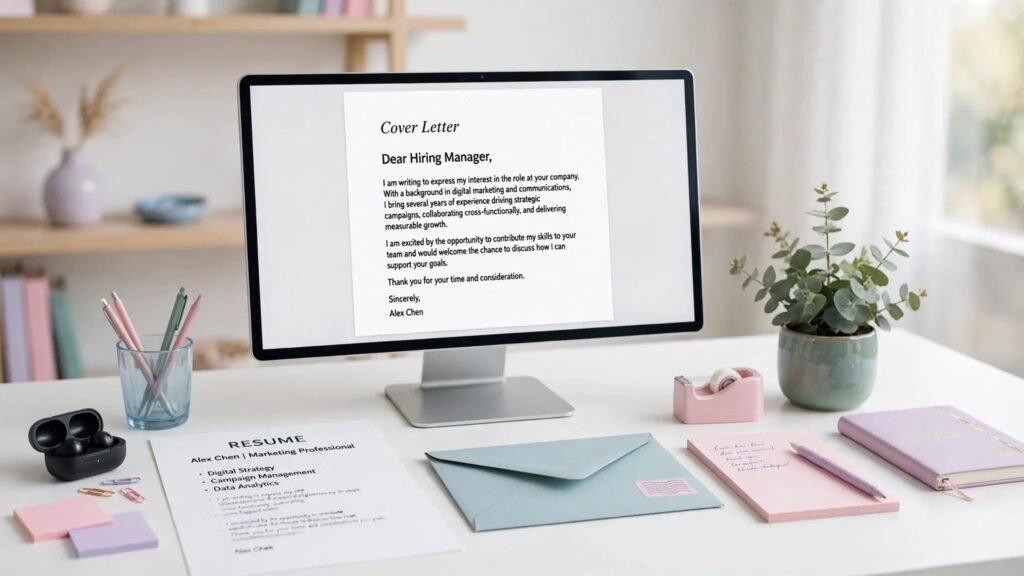
Step 4: Close with confidence
End with a short paragraph that thanks the reader, repeats your interest and states the next step. You might say that you would welcome the chance to discuss the role in an interview, or that you will follow up in a week or so. Then use a polite sign-off such as “Yours sincerely” or “Kind regards” followed by your name.
A complete example
Dear Ms Rahman,
I would like to apply for the Customer Support Assistant role advertised on your careers page. For the past two years I have worked in a busy electronics shop, where I handled around 40 customer questions a day, and I would like to bring that experience to your support team.
In my current job I became the person who dealt with difficult returns. I created a one-page checklist for the team that explained how to handle common problems, and our manager adopted it for all new staff. I am comfortable using ticketing and email tools, and I completed an online course in spreadsheet basics, which I use to track repeat issues.
I am drawn to Brightline because your customers value quick, friendly answers, and that is how I like to work. I would welcome the chance to discuss how I could help your team. Thank you for your time and consideration.
Kind regards, Daniel Okoro
The example is about 150 words. A full letter can be longer, up to about 350 words, if you have more to say, but each sentence should earn its place. Replace the company, role and achievements with your own real details.
Tailoring in 15 minutes
- Keep a master letter: Write a strong base version with paragraphs for your main achievements.
- Change the opening and closing: Name the company, the role and one reason that you are interested in this employer.
- Choose the best evidence: Pick the one or two examples that match this advert and delete the others.
- Mirror the language: Use the advert’s key words where they honestly describe your experience.
- Check names and details: Wrong company names are a common and costly mistake.
If you want a head start, our free Job Application Letter Builder can draft a first version, and the Professional Email Generator helps with the covering email. Use the Word Counter to check the length.
Formatting and sending
- Match your resume: Use the same font, header and style so that the two documents look like a set.
- Keep it to one page: Use a standard font at 10 to 12 points and clear margins, with short paragraphs.
- Choose the right file: Send a PDF or a Word file, as the employer prefers, with a clear file name such as
Firstname-Lastname-Cover-Letter.pdf. - Write a short covering email: If you attach the letter, put two or three sentences in the email body and keep the subject line clear.
For layout help, see our guide on formatting a resume in Word, which uses the same ideas, and for the resume itself, try our free Resume writing course.
Mistakes to avoid
- Repeating the resume: The letter should add information and context, so avoid copying your job list into paragraphs.
- Being too general: A letter that could be sent to any company shows little effort, so mention something specific about this one.
- Focusing on what you want: Explain what you can offer first, and mention your goals only where they fit the job.
- Using clichés: Phrases such as “team player” and “go-getter” say little, so give an example in their place.
- Skipping the proofreading: Spelling errors and a wrong name suggest carelessness, so read the letter aloud and ask someone else to check it.
- Making it too long: More than one page loses most readers, so cut anything that does not support the application.
Questions
How long should a cover letter be?
Aim for one page, which is usually 250 to 400 words. A short, focused letter is more effective than a long one. If the employer sets a limit, follow it exactly.
Should I address the letter to a specific person?
Yes, if you can find a name through the job advert, the company's website or a professional profile. A named greeting feels more personal. If you cannot find one, use a neutral form such as Dear Hiring Team.
What should I write if I have no experience?
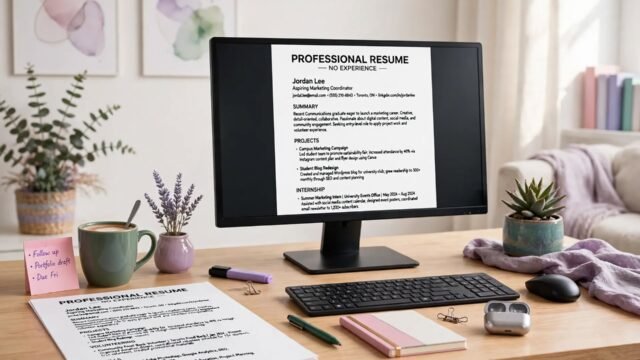
Focus on education, projects, volunteering and skills that connect to the job, and explain why you are keen to learn. Give one concrete example of a time you showed responsibility or initiative. Employers hiring for entry-level jobs often value attitude and potential.
Do I still need a cover letter if I submit an online form?
If there is an upload field or a notes box, a short, tailored version is worth including. If the form does not allow one, you can put your key message in the email or message you send with it. Follow the instructions of the employer.
 Careers